"Everything in Africa bites, but the safari bug is worst of all.”

~ Brian Jackman


SIGN UP FOR OUR
NEWSLETTER


African Safari Newsletter

August 2007


We had another fabulous safari to Tanzania and Kenya in July!  Each day was packed with excitement and thrills at seeing so much wildlife! We had a great time in Tanzania, starting with all of the elephants and buffalo in Tarangeri National Park.

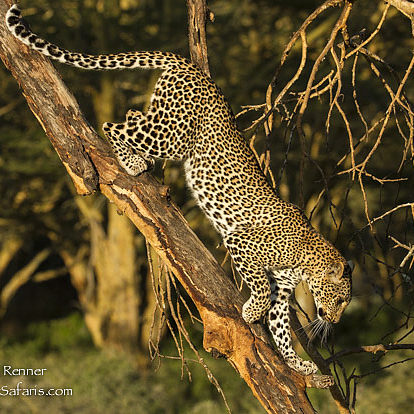
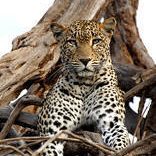
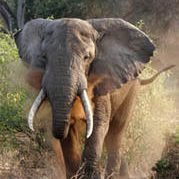
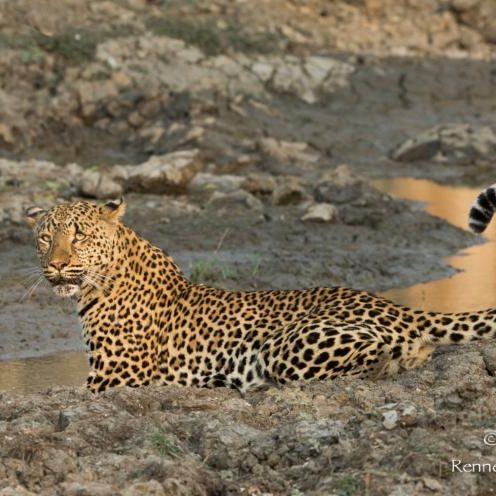
At Lake Manyara we found a beautiful leopard up in an Acacia tree. As we were photographing him, the elephant below came walking slowly out of the bush and came within a few feet of our vehicle. As he walked he would stop and pick dust with his trunk and blow it on himself. The dust works as an insect repellant and sunscreen.


Elephant at Lake Manyara, Tanzania

Canon 20D Lens: Canon 100-400IS

Copyright 2007, Paul Renner/Renner Images


These two new safaris are filling up, but there are still spaces available.
19 Day Safari to Tanzania and Kenya,
March 1-19, 2008.

Click here for safari information

and


17 Day Safari to Kenya  
September 4 - 20, 2008

Click here for safari information  


At the entrance to Ngorongoro Crater, this baboon looked deep in thought. He appeared to be thinking about how he could sign up for one of my photographic safaris or perhaps he was debating on whether to buy a Canon or Nikon.  He could easily have gotten the  answers to those questions by calling me at 949.295.3136.


Baboon 

Canon 20D Lens: Canon 100-400IS

Copyright 2007, Paul Renner/Renner Images


We were treated to a special sunrise in Ngorongoro Crater as a spectacular shaft of light created a beautiful rainbow illuminating a distant hilltop with dark storm clouds creating the background.


Rainbow in Ngorongoro Crater

Canon 20D Lens: Canon 100-400 IS

Copyright 2007, Paul Renner/Renner Images


Important Safari Information:
  • Prices for safaris include airfare from LAX, or save a little from New York.

  • We have only three passengers per nine passenger safari vehicle. You will enjoy plenty of space for you and your equipment!

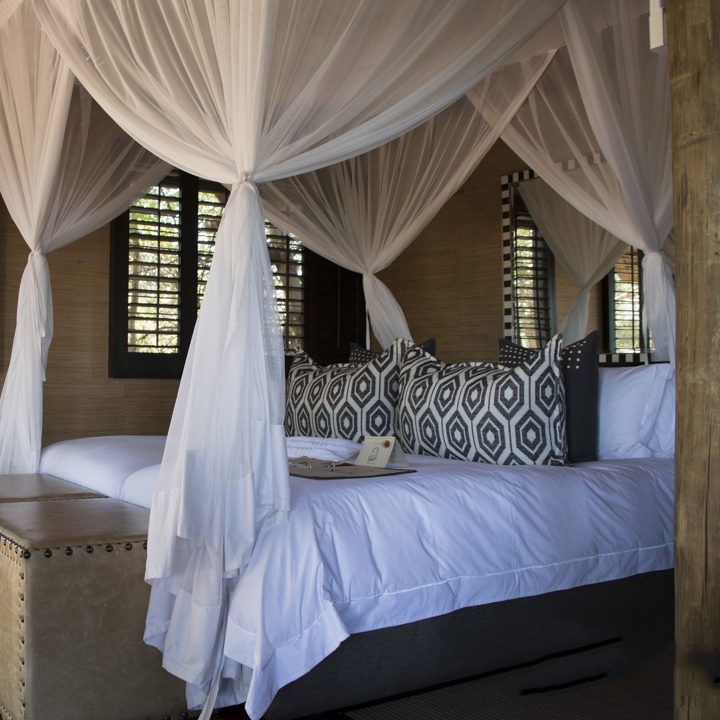
  • We stay in luxury safari lodges. View Safari Lodges

  • You do not have to be a photographer but you must enjoy watching the wildlife because that is what we do!

  • I will be there to photograph with you and available to answer your questions.

    I hope you will join me for an African Safari, your adventure of a lifetime!!!
    For more information, prices and itineraries click here.


White Rhino in the Rain

Canon 20D Lens: Canon 100-400IS

Copyright 2007, Paul Renner/Renner Images


In the crater we witnessed the miracle of new life as a hartebeest gave birth right in front of us! Within minutes the baby was trying to stand and within 40 minutes it was up walking around with it's mother!  It was fascinating to watch as the rest of the herd moved a short distance away from the mother and baby to allow space for the new baby to bond with it's mother. By doing so, when they later joined the herd, it would easy for the baby to identify it's mother.


Hartebeest and Newborn Baby

Canon 20D Lens: Canon 100-400IS

Copyright 2007, Paul Renner/Renner Images


Lodges and camps we use on our Safaris


 We stay in first class luxury lodges and camps.

For information and photos of the lodges
and accommodations click here
.


Upon leaving the crater we drove north into Kenya.  The bird life in East Africa could keep a photographer busy for a lifetime.  Each park has over 350 species of birds.  At Amboseli National Park, we were again reminded of this fact by the diversity of birds we encountered on each game drive.  Below is a male Saddle Billed Stork. Females look similar, but have yellow eyes.

Saddle Billed Stork

Canon 20D Lens: Canon 100-400mm IS

Copyright 2007, Paul Renner/Renner Images


This kingfisher had learned to kill fish by banging them on the top of the sign. I guess it is easier to swallow a fish that isn't flopping as it goes down the throat.


Pied Kingfisher and Catch

Canon 20D Lens: Canon 100-400mm IS

Copyright 2007, Paul Renner/Renner Images


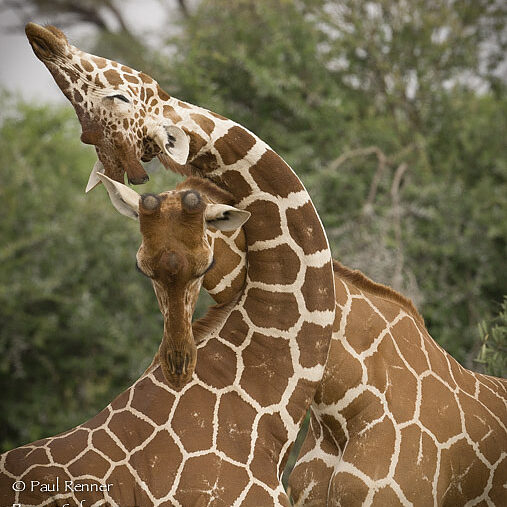
Lake Nakuru is best known for the millions of flamingos and other birds that inhabit the lakeshore. It is also known to have a good population of Rothchild's Giraffe.

Rothchild's Giraffe

Canon 20D Lens: Canon 100-400mm IS

Copyright 2007, Paul Renner/Renner Images


African White Pelican

Lake Nakuru National Park, Kenya

Canon 20D Lens: Canon 100-400mm IS

Copyright 2007, Paul Renner/Renner Images


Flamingos Swarming
Lake Nakuru National Park, Kenya
Canon 20D Lens: Canon 100-400mm IS

Copyright 2007, Paul Renner/Renner Images


I am always anxious to get to the Masai Mara!  It is such an incredible place to photograph wildlife.  On an afternoon game drive, shortly before sunset, we came across this Serval Cat. Usually shy and elusive, these cats are amazing hunters capable of leaping over ten feet, straight up in the air, to catch large birds such as storks. They also eat rodents and other small animals.

Serval Cat
Masai Mara National Park, Kenya
Canon 20D Lens: Canon 100-400mm IS

Copyright 2007, Paul Renner/Renner Images


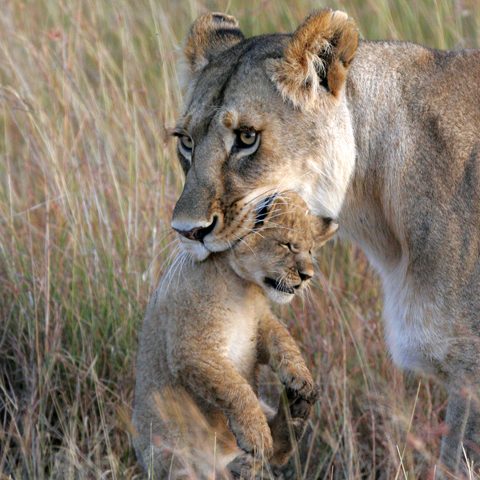
In the Mara, this lioness was moving her two cubs. This little cub was yowling and hissing and doing everything it could to let mom know that it wanted to walk on it's own, but mom would have no part of it. She would move one a short distance forward, (25 to 50 yards), put it down and return for the other one. As I watched her moving them it was evident how difficult was for her to keep track of the cubs in the tall grass. She appeared to be a good mother, as she would have to be if her her cubs were to have a chance of surviving in this harsh environment. It was a reminder that survival of the fittest is the law in nature.

Lioness Carrying Cub

 Masai Mara National Park, Kenya

Canon 20D Lens: Canon 100-400mm IS

Copyright 2007, Paul Renner/Renner Images


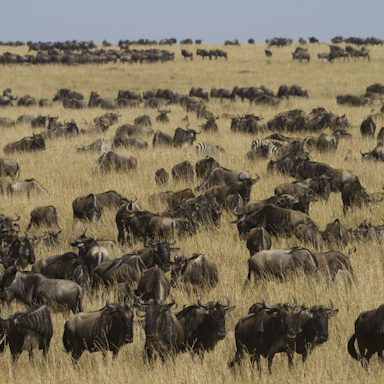
The migration of wildebeest and zebras was late in arriving to the Mara, so we were thrilled to see several crossings by zebras. As a result of heavy el ninyo rains early this year, the grass had grown tall in Tanzania, giving the vast herds plenty to eat. As a result they took their time moving slowly up into the Mara.  It is always interesting to see the huge herds of animals grazing their way across the plains.

Zebras Crossing the Mara River

 Masai Mara National Park, Kenya

Canon 20D Lens: Canon 100-400mm IS

Copyright 2007, Paul Renner/Renner Images


On our last game drive we encountered two large male lions on a buffalo they had killed. One had already eaten his fill, but this one was still hungry.  As we watched this scene, one of our  vehicles went down to the river and the people saw another herd of zebras crossing. This time the crocodiles moved in and our group watched in amazement as three zebras were caught by the crocs.  These safaris are incredible! There is always something exciting to see on every game drive. I love this business!!!!

Lion Eating Buffalo

 Masai Mara National Park, Kenya

Canon 20D Lens: Canon 28-105mm

Copyright 2007, Paul Renner/Renner Images


Africa is famous for it's spectacular sunrises and sunsets. Each day our morning game drive begins before sunrise and on our afternoon game drives we return to the lodge just after sunset. This gives us the best opportunities to photograph this incredible beauty.

Peaceful Morning on the Plains

 Masai Mara National Park, Kenya

Canon 20D Lens: Canon 28-105mm

Copyright 2007, Paul Renner/Renner Images


I hope you will join me on an African Safari, for your adventure of a lifetime!!!
For more information, prices and itineraries click here .
Enjoy each day,
Paul

For information regarding safaris and reservations call
Paul Renner at 949-235-3136
or e-mail at PaulRenner3@cox.net

You may also contact Somak Safaris at 800-757-6625
2700 E Imperial Hwy., Suite N
Brea, CA 92821
Phone: 714-985-3456 - Fax: 714-985-3464
e-mail: info@SomakSafaris.com
www.SomakSafaris.com

CST # 2073854-40


                                         © 2008 Renner Images - All Rights Reserved