HEALTH
Effective January 24, 2008, a yellow fever vaccination certificate will be
required to enter Tanzania. Anti-Malaria medication is strongly recommended
for Kenya and Tanzania. No vaccinations are currently required for Kenya. We
advise you to consult your physician or the Center for Disease Control in
Atlanta, Georgia at (404) 639-3311 for any further requirements or
recommendations. Web site for US Government, Center for Disease Control
click here.
(Top)
WEATHER
East Africa enjoys a moderate climate without any extremes in temperature.
The average altitude during the safari will be between 3,000 and 7,000 feet
above sea level, so the days should be a pleasant 70 to 85 degrees, and the
nights should be a moderate 55 to 70 degrees.
(Top)
CLOTHING, ETC.
Dress in Africa is casual. Clothing should be lightweight, loose fitting and
of “breathable” fabrics, such as cotton. While out in the bush you will find
that neutral colors are best as they blend in with the natural surroundings
and show the least amount of dust. Also, remember that bugs are more
attracted to bright colors. Laundry service is available at most hotels,
lodges and camps at a nominal fee. The nights at the higher elevations can
be cool, so you should bring a sweater or jacket. While on safari, only 4 or
5 changes of clothes are necessary. For the daytime, shorts and T-shirts are
most comfortable with perhaps a light jacket or sweater for early morning
games drives. In the evening, long pants and long-sleeve shirts or
lightweight sweatshirt is good. Boots are not necessary for safari.
Comfortable walking or running shoes are just fine. Sandals or flip-flops
are handy around the lodges and swimming pools.
Some lodges and camps have a supply of insect repellent, however, it is a
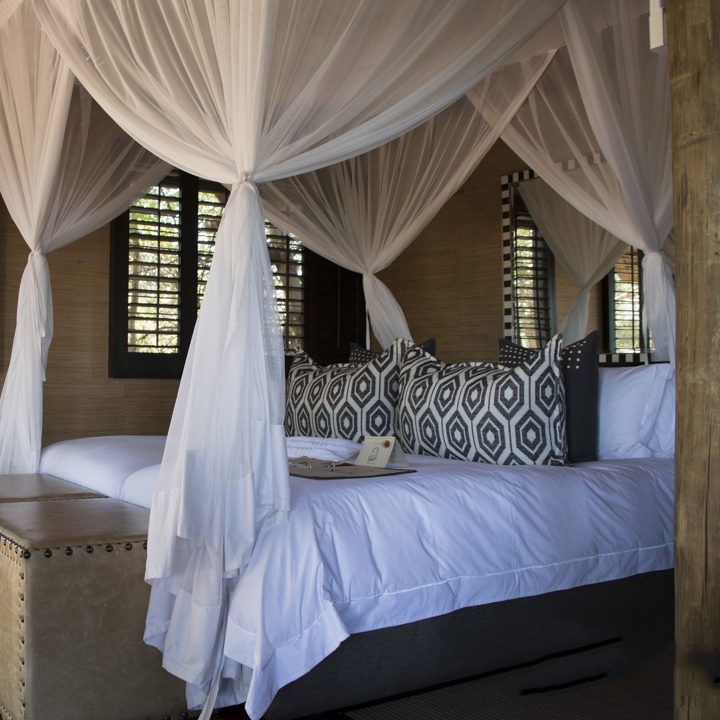
good idea to bring some with you. Many lodges and camps have mosquito nets
in the bedrooms. The mosquitoes usually come out around sunset.
(Top)
FOOD & WATER
Tap water is safe in all major hotels, although bottled water is available
for purchase in most places. We recommend that you drink bottled water while
on safari. Beer, wine, cocktails and soft drinks are also available for
purchase.
The cuisine throughout is outstanding. Meals include full American buffet
breakfast with fresh local fruits; safari lunches usually consist of hot and
cold buffet’s and dinners are sit down with an excellent choice of menu
items.
(Top)
LUGGAGE
Two pieces, per person, of checked baggage are allowed on international
flights into Kenya or Tanzania. Each bag must not exceed 50 lbs. We
recommend baggage be kept to a minimum; one main lightweight bag and an
overnight bag are adequate. Most city hotels have storage space for excess
luggage not required on safari.
(Top)
CURRENCY & BANKING
If you plan to use your credit cards in Africa, contact your credit card
company and tell them where you are going and the dates you will be
traveling. Contact them before you leave home. This will keep your card from
being denied when you want to use it.
Local currency in East Africa is expressed in shillings. Travelers checks
and most major credit cards are widely accepted. Banking hours are generally
from 9:00 am - 2:00 pm. Monday through Friday in most cities.
(Top)
SECURITY
As in most major cities, sensible security precautions should be taken. Keep
a close watch on purses, handbags, wallets and cameras. Avoid wearing
expensive or flashy jewelry. It is advisable to hire a taxi if you wish to
move around at night and for your personal safety, avoid deserted lanes and
streets.
(Top)
ELECTRICITY
Voltage throughout East Africa is 220-240 AC. You will need to bring your
own converter and adapter (universal adapter with three square prongs) if
you plan to use hairdryers, electric shavers, etc or if you wish to recharge
batteries for cameras and other electronic equipment. A good quality power
strip that plugs into the electrical adapter is very convenient for charging
a number of items at one time. Below are pictures of the adapter plug
configuration that works at the lodges we use in Kenya and Tanzania.

The male side of the adapter needs to have three rectangular prongs as in
photo below.

The female side of the plug accepts a standard US three pronged plug into
which I plug a power strip. This gives me extra outlets for use as needed.
Note that the adapter accepts standard US three pronged plugs. These
adapters can be easily purchased online at Magellan's Travel Supplies in
Santa Barbara, California. Click here for their online catalogue. Select a
destination under Country Guides, (Kenya or Tanzania) >click on Electrical
Standards> select the adapter with three prongs and spaces for three prongs
on the back side (Grounding Adaptor Plug C.)

(Top)
TIPPING
Most major hotels and restaurants include a service charge. Tipping is not
obligatory and is entirely at your discretion. A gratuity of 10% is
customary at restaurants and bars if a service charge is not included. On
our safaris, the tips for the meals are included, however, the tips for the
drinks you purchase are not included.
Tip to your driver/guide are not included in the price of your safari.
Because we limit our vehicles, to only three passengers, we recommend a
minimum tip of $20.00 per person per day. If at the end of the safari you
would like to tip extra that is entirely up to you.
Porters at airports, hotels or lodges may be tipped $1.50 per piece of
baggage; this too, is at your discretion.
(Top)
SOUVENIRS
As in most African countries, there is a huge range of souvenirs to be
purchased along the roadside. These are handmade, but mass produced, so
always check the quality before buying. Materials include ebony, soapstone
and ivory. Note that it is illegal to export products that contain any
elements of elephant, rhino or sea turtle. Tribal souvenirs are available;
including Maasai beaded jewelry, kiondas (woven sisal baskets) and natural
or decorated calabashes (dried gourds). Bright sarongs (kangas or kikois)
make good wearable souvenirs. If you are after quality artwork, it is
probably wisest to look in galleries and shops that deal in it, rather than
buying on the roadside markets.
(Top)
SUGGESTED PACKING LIST
-
Important Documents
-
Airline tickets
-
Passport and visa for each country you will be visiting
-
Photo copies of your passport, credit cards, and airline
tickets (to be kept separately from the originals)
-
Vaccination certificates
-
Emergency phone numbers (in itinerary given to you by
Somak Safaris)
-
Trip Itinerary
-
Extra passport photos
Personal Items
-
Your prescription medications (bring enough to last
through the entire trip)
-
3-5 changes of casual clothing (cotton shorts, T-shirts,
long-sleeve shirts, sweater or jacket, slacks, sport shirts, blouses,
dress, etc.) Avoid bright colors and whites. Clothing in neutral colors
or earth tones: khaki, light brown, tan or green is best for improved
wildlife viewing on game drives and they are also less likely to attract
bugs.
-
Laundry facilities are available at the lodges when we
stay for two or more nights.
-
Two pairs of comfortable shoes and a pair of flip-flops
or sandals
-
If you have back problems, bring an extra pillow or
cushion for the seats in the safari vehicles.
-
Swim suit and cover-up
-
Hat with a visor
-
Sunglasses (neck string comes in quite handy)
-
Sun Screen
-
Medical history
-
Copies of prescriptions
-
Malaria Tablets
-
Insect repellent
-
Eye drops (the sun is very bright and it will be dusty)
-
Extra contact lenses and contact lens cleaning solution
-
Skin and Hair moisturizers
-
Toothbrush/toothpaste/dental floss
-
Dust Mask (especially if you suffer from allergies)
-
Throat Lozenges: (for sore throat from dust or colds)
-
Imodium (or other Anti-diarrhea medicine)
-
Personal medications (there are basic first aid kits in
the lodges and camps)
-
An extra pair of glasses/contact lenses if you wear them
-
Large zip-lock bags (great for keeping film and camera
equipment clean, storing wet swim suits and dirty shoes, etc.)
-
Pre-moistened small individually wrapped towelettes for
quick freshen ups.
-
Small travel towel
-
Small scissors ( go to top )
-
Tweezers
-
Lip balm or chap stick
-
Q tips and cotton balls
-
Razor & shaving cream/gel
-
Birth control (enough to last through your trip)
-
Sanitary requirements (shops are sometimes few and far
between, and very basic)
-
Band aids and moleskin
-
Cold/flu tablets
-
Allergy remedy
-
Ace bandage
-
Vitamins
-
Medicine for headache and/or pain
-
Antiseptic cream
-
Motion sickness tablets
-
Heartburn remedy
-
Re-hydration salts
-
Small compass
-
Book to read between game viewing or during leisure time
-
Money Belt
-
Electrical adapter (3 square prongs) and a power strip
for charging your equipment
-
Mini sewing kit
-
Binoculars
-
Small Flashlight with extra batteries and bulbs
-
Small calculator
-
Pen/pencil
-
Travel Alarm Clock (small, but loud enough to wake you )
-
Extra batteries
-
Diary to record your favorite memories
-
Small stickers to label your used films
-
Phone card and international access numbers
(Top)
PHOTOGRAPHY
If you are still shooting film bring plenty of it, and extra batteries as
both items are very expensive in East Africa. Make sure you have some way of
protecting your camera from dust while on safari. Most game viewing is done
in the early morning and late afternoon and 100 or 200 ASA film is probably
the best to use. A telephoto or zoom lens and a wide angle lens are
recommended for some truly outstanding and impressive photographs. If you
are using digital cameras be sure to bring extra memory cards, rechargeable
batteries and charger, plus a way to down load and store your photos from
the camera, The lodges have electricity so charging batteries and using
laptops is no problem.
Do not take photographs of military installations, police stations,
government facilities, airports, border post soldiers or police. Always ask
before taking photographs of people. They will most likely want to charge
you, so ask your driver to negotiate for you.
(Top)
Suggested Photography Equipment
-
Camera
-
Back up camera (This isn't essential but you would hate
to be in Africa and have your camera malfunction.)
-
Film Those that are still shooting film, should bring
lots of it!
-
Extra batteries for camera
-
Wide angle lens (Most of your shooting will be with
telephotos, but wide angles always have their place. One thing I like to
do is photograph people, like Maasai tribesmen, from a low angle with a
wide angle lens. )
-
Telephoto lens (I think you should have at least a 300mm
capability, but 400mm or longer would be better. Much of our shooting
will not require long lenses, since animals are often close to the
vehicle – within a 200mm range for nice close-ups. But there are,
indeed, quite a few situations where you will want and need a longer
lens. (One solution that gets around spending a fortune for a long
telephoto is to use a 200mm lens with a 1.4x or 2x teleconverter. If you
have a camera with a chip that is not full frame, the magnification
factor plus the teleconverter will give you a significant focal length.
For example, if you have a Canon 20D, or 30D a 200mm lens becomes a
320mm (200 x 1.6x = 320mm), and then with a 1.4x converter that equals a
512mm telephoto.)
-
Tripod You will not need a tripod while shooting
wildlife from the safari vehicle. Instead,you will use a bean bag or
some other type of soft support for your long lens. A tripod would only
be used around the camp. I always carry one because ‘you never know’
when it might be needed. If you want to limit the weight and bulk of
your baggage, leaving the tripod at home would not be a bad thing to do.
-
Bean bag: (This is a sewn pouch that can be sealed on
one side with velcro or a zipper, and when we get to Africa you fill it
with beans or rice. It is used in lieu of a tripod in the vehicle to
steady your camera when you shoot.) A good one called the Safari Sack
made by Kinesis can be purchased here: Kinesis
-
Flash and extra AA batteries
-
Filters: Skylight or UV filters that protect your lenses,
Polarizing Filter, Split image neutral density filter
-
Compact Flash or SD cards: I recommend 8gig cards, especially for
cameras with 8 megabytes and higher. Bring as many as you think you will
need and then one or two extra. If you are shooting RAW it is not hard
to shoot 16 gigs a day.
-
Sensor cleaning materials: Hand blower, Sensor swabs, pec pads with the liquid Eclipse, Sensor brush, Arctic Butterfly, etc.
This is essential to keep your sensor free of dust specs. I will be
bringing three things: hand blower, pec pads and Elipse, and an Arctic
Butterfly.
-
Portable hard drive or laptop: This is for dumping your
images from the flash card so you can re-use the card. I strongly
suggest redundancy, meaning two portable hard drives or a laptop and a
portable hard drive so you have two sets of your images in the event of
equipment failure or computer crash. I realize a laptop is one more
large, vulnerable thing to carry, and therefore you need to think
carefully about whether or not to bring one. If you don’t want to carry
one, that’s perfectly fine, but make sure that you have redundancy in
storing your digital images. Once you erase a flash card and put new
images on it, the previously erased shots are gone forever. Bring more
storage than you think you will ever need. On these photo safaris it is
not uncommon for people to shoot 10 to15 thousand images. For that you
will need lots of storage space!
-
Extra camera battery
-
Battery charger
-
Power strip: (This is so you can re-charge several
things at one time.)
Electrical adapter with three rectangular prongs (This fits into the
Kenyan electrical sockets so you can plug in your accessories. I
recommend one that is heavy duty.
-
Camera manual: (I strongly suggest you bring this.)
-
Crucial electrical connecting cables: Check and double
check that you have all the cables you need.
-
Small paint brush: (I use this for dusting camera off
because there can be a lot of dust in Africa on the game drives.)
-
Pillow case: (This is for placing the camera inside in areas of a lot of
dust.)
-
Lens cleaning: tissue or microfiber cloth
-
Binoculars: A good pair that does not hurt your eyes is
very nice for watching wildlife if they are at a distance.
(Top)